

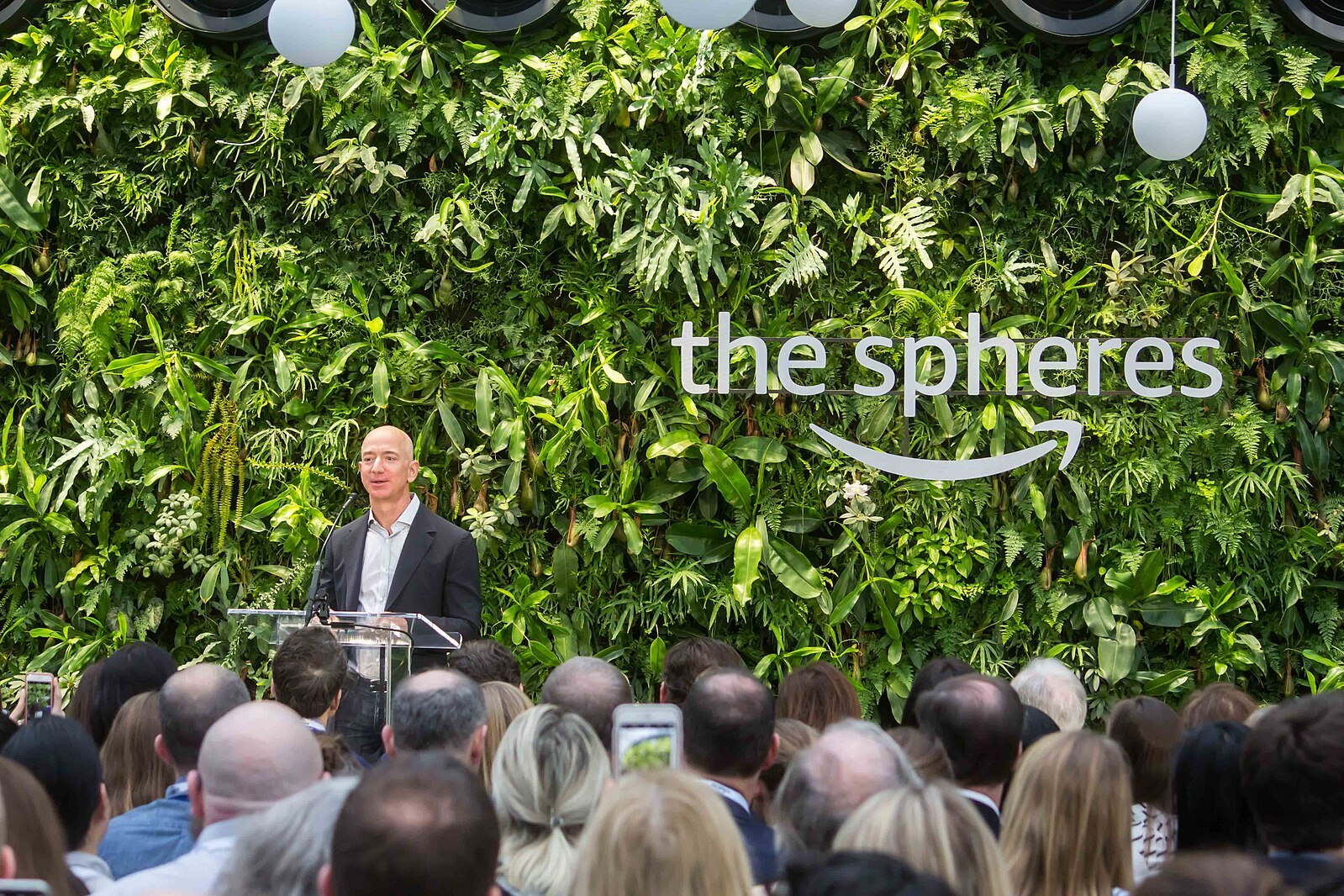

Photograph Source: Seattle City Council – CC BY 2.0
Top Amazon executives have received huge tax windfalls from the 2017 tax reform and stand to reap even bigger windfalls from the new tax legislation Congress is currently crafting.
A new report from the Institute for Policy Studies, the Athena Coalition, and PowerSwitch Action provides detailed analysis on how our rigged tax system has expanded the massive fortunes of Amazon founder Jeff Bezos and CEO Andrew Jassy while leaving ordinary workers and small businesses behind.
Jeff Bezos has reaped billions from the capital gains tax double standard
When the Republican-controlled Congress passed the last major tax bill in 2017, they failed to fix one of the most perverse aspects of our tax code: the deeply discounted rate on income from wealth versus income from work. Because the rich get most of their money from investments, millions of teachers and firefighters wind up paying a higher tax rate than many billionaires.
Amazon founder Jeff Bezos has sold $36.7 billion worth of his company’s stock since the 2017 reform. If that law had equalized the 20 percent capital gains rate with the 37 percent top marginal rate on ordinary income, he would’ve owed Uncle Sam $6.2 billion more in taxes on those sales. To put that sum in perspective, it would be enough to cover the cost of nearly 650,000 public housing units for a year.
Current Congressional leaders appear eager to perpetuate this perversity.
Corporate and top marginal tax rate cuts are boons to executives
In the last tax reform go-round, Congress cut the top marginal income tax rate from 39.6 percent to 37 percent. This didn’t affect Bezos much because he receives a modest annual salary as Amazon’s executive chair.
Amazon CEO Andrew Jassy, on the other hand, enjoyed a significant windfall. Based solely on the $263 million in salary and vested stock he pocketed between 2018 and 2024, we estimate that Jassy saved roughly $6.6 million from this rate reduction. That amount could’ve covered annual child care costs for more than 600 families.
The post The Tax Debate: What’s In it for Jeff Bezos and Amazon CEO Andrew Jassy appeared first on CounterPunch.org.
This content originally appeared on CounterPunch.org and was authored by Sarah Anderson.

Sarah Anderson | Radio Free (2025-04-29T05:45:00+00:00) The Tax Debate: What’s In it for Jeff Bezos and Amazon CEO Andrew Jassy. Retrieved from https://www.radiofree.org/2025/04/29/the-tax-debate-whats-in-it-for-jeff-bezos-and-amazon-ceo-andrew-jassy/
Please log in to upload a file.
There are no updates yet.
Click the Upload button above to add an update.